
Choosing a Refrigerated Truck Manufacturer for B2B Cold Chain Projects
A practical guide for buyers comparing a refrigerated truck manufacturer, OEM build capability, body quality, cooling integration, export support, and after-sales responsiveness.
When procurement teams start looking for a refrigerated truck manufacturer, they are rarely just comparing brochure specs. In B2B cold chain work, the real question is whether the supplier can build a dependable vehicle around route conditions, body requirements, cooling performance, and delivery timelines. A truck that looks competitive on paper can still create problems later if the build process is weak or the support response is slow.
At MagiTruck, we see this most often with buyers who need export-ready configurations for food distribution, pharmaceutical transport, or regional cold chain fleets. They may start by searching for a refrigerated truck manufacturer or refrigerated truck manufacturers, but the shortlist usually becomes meaningful only after they compare chassis options, insulated body construction, and the matching truck refrigeration unit.
What B2B buyers really compare
A commercial buyer is usually looking past the headline price. The evaluation often comes down to five practical areas: manufacturing consistency, body insulation quality, refrigeration system match, delivery lead time, and communication during the build. That is why a serious refrigerated truck supplier is expected to explain production details clearly instead of only offering a generic spec list.
- Can the manufacturer handle custom body dimensions and internal layout changes?
- Can the vehicle be matched to a specific frozen or chilled route pattern?
- Are certifications, export documents, and technical communication handled well?
- Is the after-sales process clear if parts or technical questions come up later?
If those answers are vague, the buyer is not really comparing a capable refrigerated truck manufacturer. They are only comparing quotations.
Why body and cooling integration matters
A cold chain vehicle works well when the refrigerated truck body and cooling system are designed together. Buyers often underestimate how much insulation thickness, door sealing, floor design, and air circulation affect real temperature stability. That is one reason why experienced reefer truck manufacturers usually talk about the truck as a system rather than a collection of parts.
If you want to compare that side of the project in more detail, our Body & Cooling Technology page is a useful next step. It shows how structure and cooling design work together in practical refrigerated truck applications.
How MagiTruck supports B2B projects
MagiTruck focuses on the commercial side of the decision. That means helping buyers compare vehicle size, body construction, cooling unit fit, and export coordination in one conversation. Some projects need a ready configuration from our Refrigerated Trucks page. Others need a more tailored build through our Custom Truck Build service.
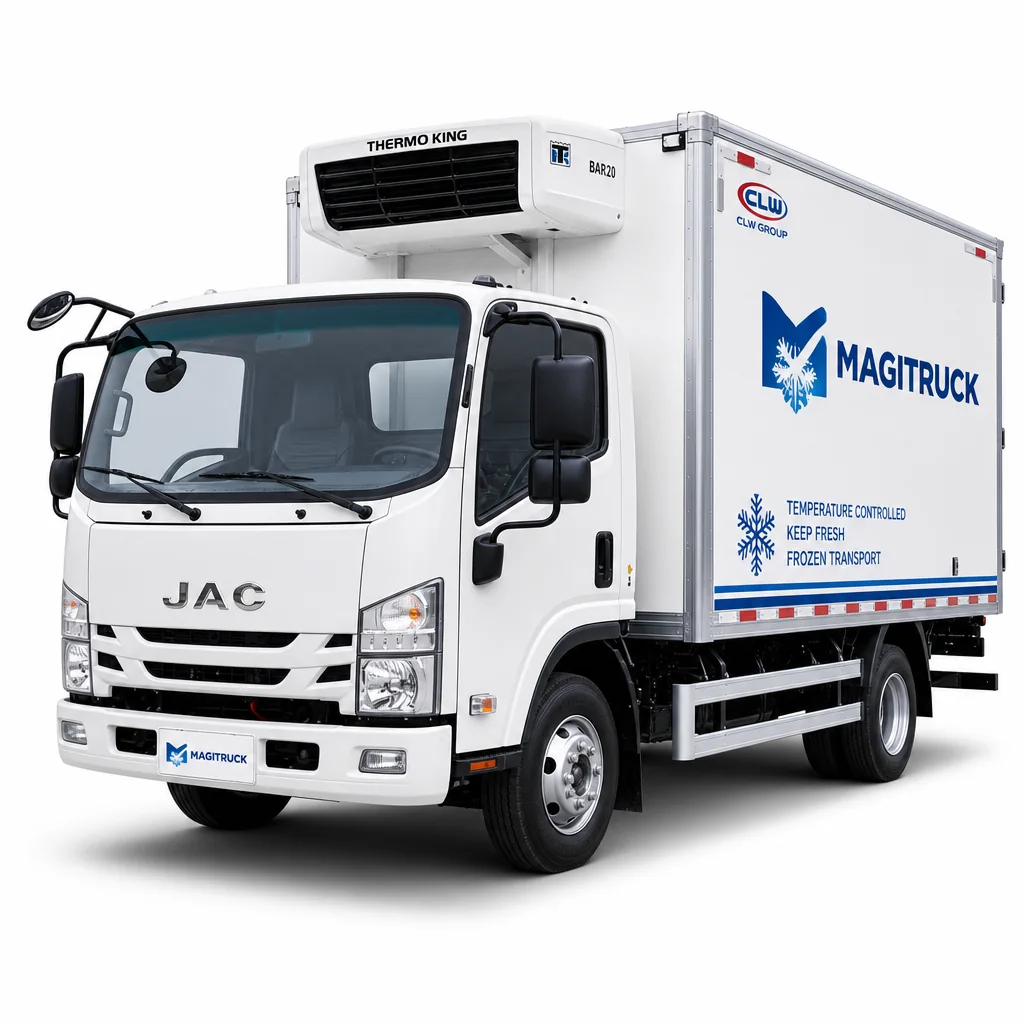
For buyers who need an example of how a complete vehicle and cooling package come together, our JAC Thermo King reefer truck is a good reference point. It shows how a B2B buyer can review truck platform, cooling setup, and application fit in one place.
Questions to ask before sending an inquiry
Before contacting a refrigerated truck manufacturer, it helps to prepare a few details: cargo type, target temperature, route length, ambient climate, payload expectations, and any special requirements such as partitions or hanging rails. A stronger brief leads to a stronger recommendation.
If you are currently comparing a refrigerated truck supplier for a fleet or project purchase, contact MagiTruck with your route and cargo details. We can recommend a more suitable body and cooling combination instead of sending a one-size-fits-all quotation.